Drive Unit Failure: Early Warning Signs in Tesla Models
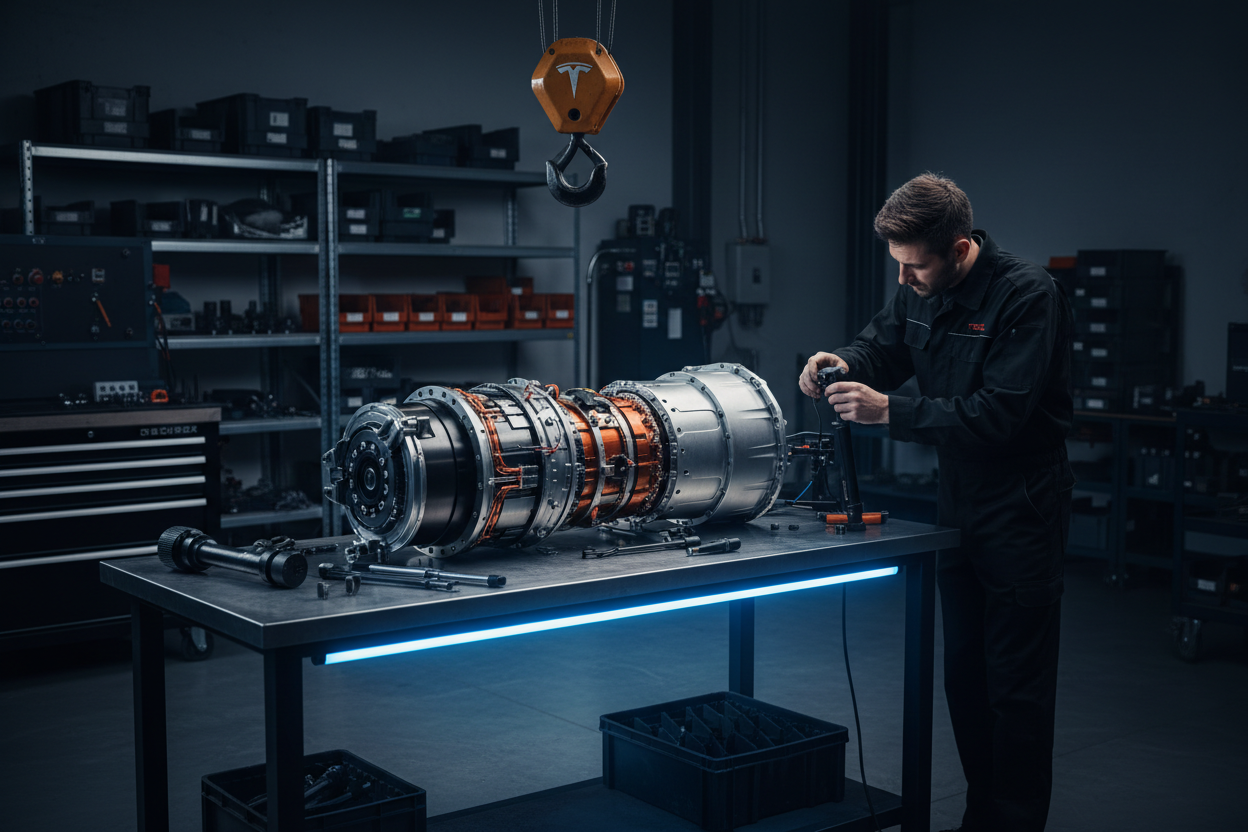
Tesla's drive units are remarkably reliable — but they're not indestructible. Catching early warning signs can mean the difference between a minor repair and a full unit replacement.
Common Early Warning Signs
Whining or Humming at Speed A high-pitched whine that increases with vehicle speed (not related to road noise) often indicates a bearing issue inside the drive unit. This is one of the earliest detectable signs.
Grinding During Acceleration A grinding sensation when applying power — especially from a stop — can indicate gearbox wear or a failing planetary gear set.
Vibration Through the Floorboard Vibration felt through the floor at highway speeds, distinct from tyre imbalance, can signal motor imbalance or coupling issues.
Clunking on Direction Changes A clunk when shifting from Drive to Reverse, or vice versa, often indicates worn motor mounts or output shaft play.
Reduced Performance / Power Limiting If your Tesla suddenly limits power or displays a "Reduced Power" warning, the drive unit's thermal protection or a motor fault may be triggering a protective mode.
Error Codes Codes like "DI_a046", "DI_a175", or inverter-related faults are direct drive unit warnings. These require immediate professional attention.
Model-Specific Notes
- Model S/X (pre-2020): Front drive units on dual-motor variants have a higher historical failure rate. Listen for whining from the front. - Model 3/Y: Generally more robust, but rear unit bearing noise has been reported on higher-mileage vehicles.
Don't Wait
Drive unit issues rarely fix themselves. A bearing that costs $300 to replace today can destroy the motor if ignored, turning a minor repair into a $4,000+ job. Book a diagnostic at the first sign of unusual noise.