What Happens During a Tesla Full Diagnostic?
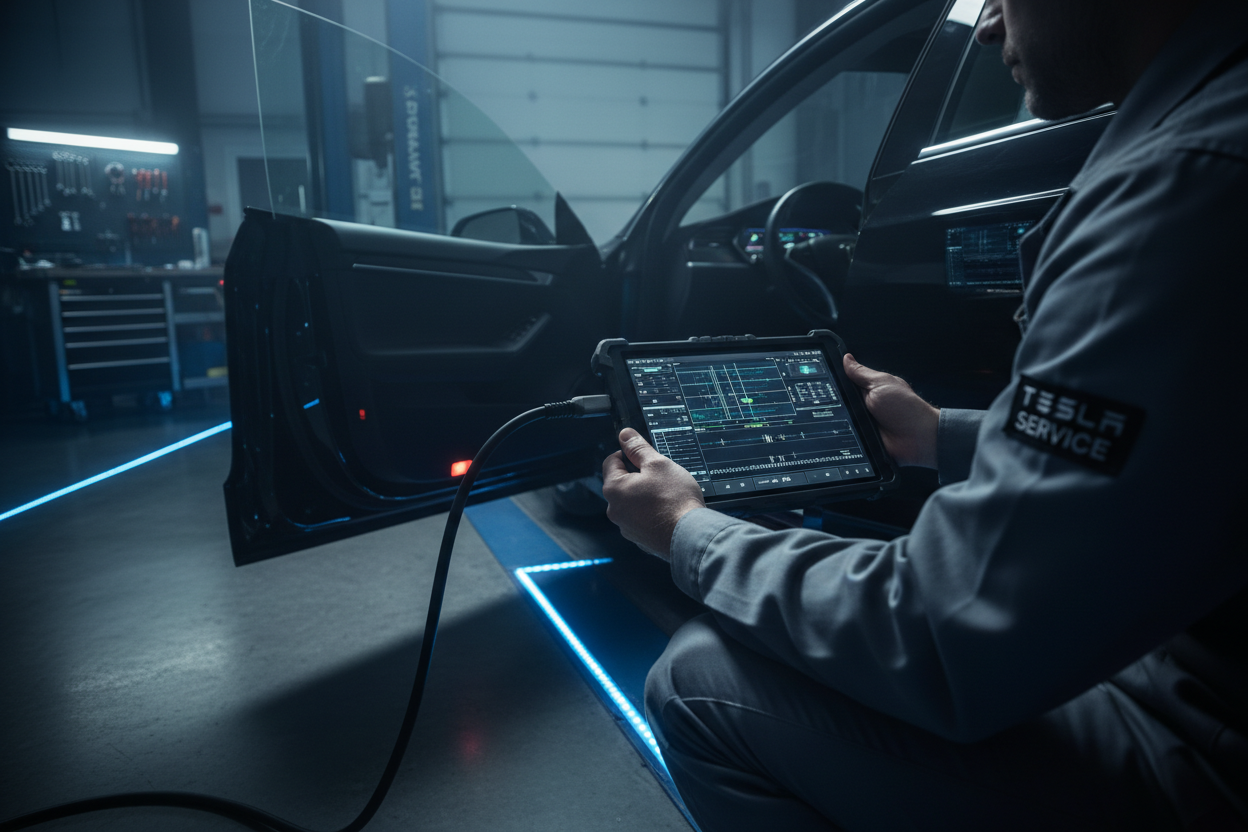
Many Tesla owners assume their car's touchscreen warnings are the only indicator of a problem. In reality, Tesla vehicles store hundreds of fault codes across dozens of modules — most of which are invisible to the driver.
What We Scan
A full professional diagnostic covers every electronic control unit in the vehicle:
Battery Management System (BMS) Cell voltages, state of charge, state of health, thermal data, historical fault logs, and charge cycle count. This tells us exactly how healthy your battery is at a cell level.
Drive Unit(s) Motor temperature logs, inverter faults, gearbox status, and torque output data. Early drive unit issues show up here before any symptoms appear.
Onboard Charger Charge acceptance rates, thermal limits, communication faults, and port condition — essential if you're experiencing slow charging.
HVAC & Thermal Management Refrigerant circuit pressure, heat pump operation, coolant loop temperatures, and cabin sensor data.
Suspension Air suspension height sensors, compressor run time, and corner pressure data (for air suspension models).
Autopilot & Cameras Camera calibration status, ultrasonic sensor readings, and Autopilot fault history.
12V System Battery voltage, current draw, parasitic drain sources, and relay status.
What the Report Includes
After the diagnostic, you receive a written report listing every active and historical fault code, a plain-English explanation of what each means, and our recommended repair priority (urgent vs. monitor vs. no action needed).
When to Get a Diagnostic
- Before purchasing a used Tesla - After any warning light appears - If charging speed has dropped - Annually as preventive maintenance